
How to check safety before you buy a home in Orlando
We don’t rate neighborhoods as safe or unsafe. What feels safe differs from person to person, and the data is public. Here is where to look it up for any address: crime, flood risk and how well a home stands up to storms.
Checked October 2026 · Flood zones from FEMA’s National Flood Hazard Layer.
Crime: check with the agency that covers the address
Start by finding out who polices the home. A mailing address in Winter Garden, Kissimmee or St. Cloud doesn’t mean the home is inside that city. It may be in unincorporated county land, covered by the county sheriff. Ask the builder or your agent, or check whether the county property appraiser’s record puts the parcel inside a city.
- Orlando Police Department, for addresses inside Orlando city limits.
- Orange County Sheriff’s Office calls for service, for unincorporated Orange County.
- Osceola County Sheriff’s Office, for unincorporated Osceola County.
- Cities such as Kissimmee, St. Cloud and Winter Garden have their own police departments.
For yearly totals, the FBI’s Crime Data Explorer shows the crimes each agency reports, by type and year.1 An agency’s numbers cover its whole area, not one community, so use them to compare trends rather than streets.
Flood risk: look up the flood zone
FEMA’s flood maps put every address in a zone. High-risk zones start with A or V; with a federally backed mortgage on a home there, you must buy flood insurance. Zone X is moderate or minimal risk, but about 1 in 3 flood insurance claims come from low- and moderate-risk zones.2
- Look up the exact address on FEMA’s Flood Map Service Center.3
- Ask the builder or seller whether the home has an elevation certificate, which shows how high it sits relative to expected flood levels.
- Get a flood insurance quote before you sign, even in Zone X.
Flood zones in the communities we cover
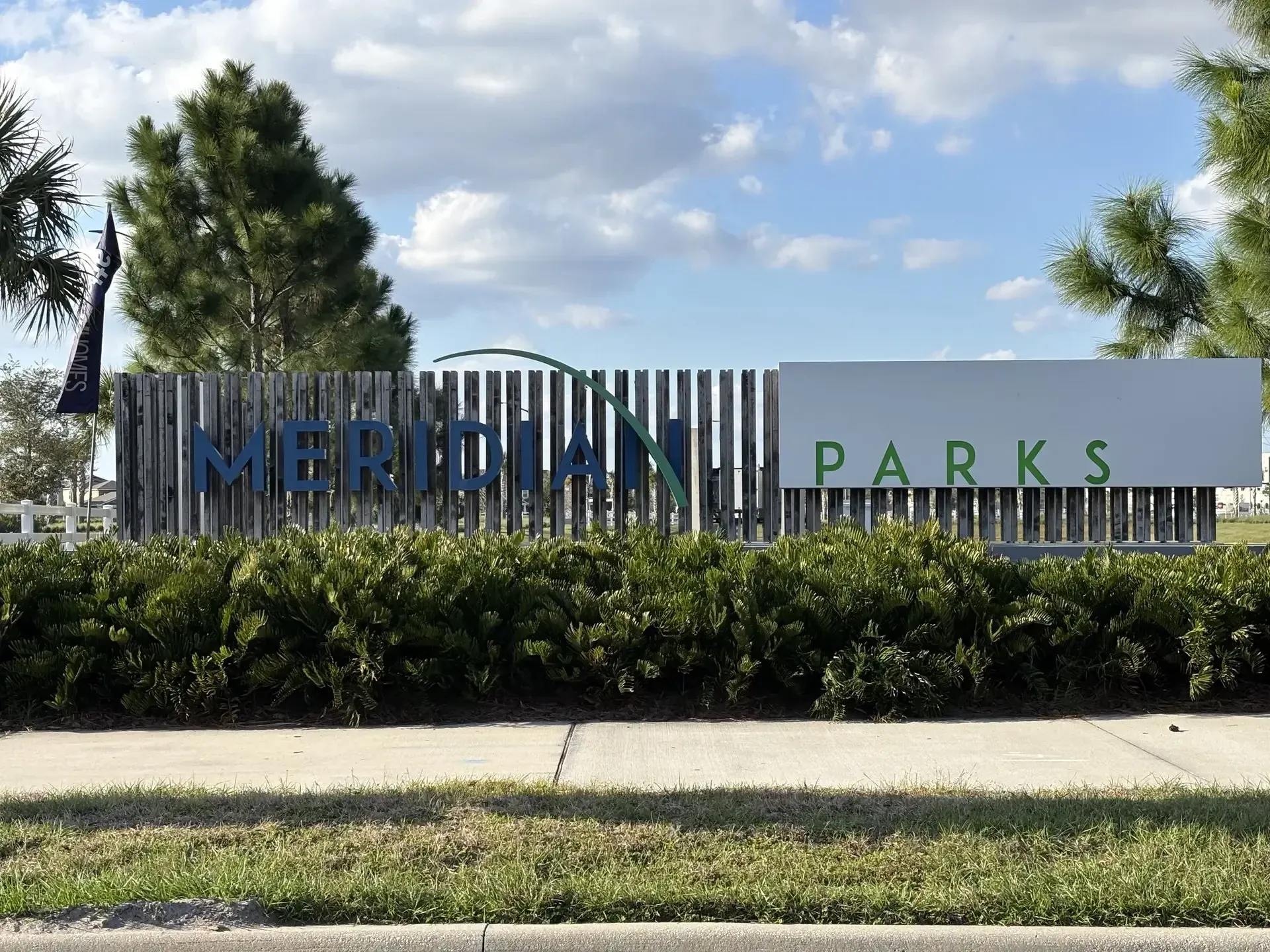
Every community’s mapped center is in Zone X (minimal flood hazard), from FEMA’s National Flood Hazard Layer. That doesn’t make every lot safe: FEMA maps high-risk zones close by in every one of them. We sampled 25 points within about 0.4 mile of each center; the table counts how many FEMA maps as high-risk (zones A and AE), most first. Check the exact lot you’re buying.
| Community | High-risk points nearby |
|---|---|
| Storey Park | 10 of 25 |
| Isles of Lake Nona | 9 of 25 |
| Meridian Parks | 9 of 25 |
| Waterleigh | 9 of 25 |
| Laureate Park | 8 of 25 |
| Sunbridge | 7 of 25 |
| Storey Lake | 6 of 25 |
| Hamlin | 3 of 25 |
| Lakeshore Preserve | 3 of 25 |
Storms: what new construction has to meet
New homes in Florida must meet one statewide building code, the Florida Building Code, which includes standards for wind.4 That is one advantage of buying new: you know the code a home was built to.
- Ask how the roof is attached to the walls, and whether windows are impact-rated or come with shutters.
- Ask about a wind mitigation inspection. Florida requires insurers’ rates to include discounts for construction that reduces windstorm losses, and the inspection documents those features.5
- Some builders advertise concrete-block construction, as in Waterleigh; ask each builder what its walls are made of.
On a visit
Some things you can only judge in person. Go at different times of day, including after dark, and look for:
- Street lighting, sidewalks and how busy the main roads are.
- How the community’s entrances work. A gated community such as Isles of Lake Nona controls who drives in.
- Where the nearest fire station and hospital are, and how long the drive takes.
Sources
This guide explains where to find information; it isn’t legal, insurance or engineering advice.