What is a CDD?
A CDD (community development district) is a small unit of local government that builds and maintains a new community’s roads, water, sewer, stormwater ponds and, often, its amenities. Homeowners repay it through a yearly assessment on the property tax bill, on top of any HOA dues.
Checked against the 2026 Florida Statutes, October 2026.
Why new communities have one
Before the first house goes up, a developer has to put in streets, pipes, drainage and street lights. In Florida, a developer can ask the county or city to create a CDD to pay for that work. The district borrows by issuing bonds, and the homes inside it pay the bonds back over time.
For a buyer, that shifts part of the cost of the community out of the home’s price and into a yearly bill. You may pay less up front, but you keep paying the assessment for as long as you own the home, and the next owner takes it over when you sell.
What it pays for
Florida law lets a CDD provide water management and drainage, water and sewer service, and roads built to county standards, with street lights, landscaping and buried power lines.1 Many districts also own the parks, trails, pools or clubhouse. Because the district is a public body, those amenities may be open to the public, sometimes for a fee.
The two parts of the bill
A CDD assessment usually has two pieces. The district’s budget shows each one by lot type.
- Debt service repays the bonds that paid for the roads and utilities. The amount follows the bond schedule and goes away once the bonds are paid off.
- Operations and maintenance covers upkeep: mowing common areas, ponds, lighting, insurance, management. The board sets it each year in a public budget, so it can go up or down.
Bigger lots usually carry bigger assessments. In the communities we cover, yearly CDD assessments run from about $870 for a townhome to about $3,090 for a single-family lot.
How you pay it
Most districts bill through the county tax collector, so the assessment appears as a separate line on your November property tax bill.2 If your mortgage has an escrow account, the lender pays it with your taxes. The assessment is a lien on the home, enforced the same way as county taxes, so it can’t be skipped.3
CDD vs. HOA
Many Orlando communities have both. They do different jobs.
| CDD | HOA | |
|---|---|---|
| What it is | Local government | Private association |
| Pays for | Roads, utilities, ponds, often amenities | Rules, common areas, often internet or lawn care |
| Billed | Yearly, on the tax bill | Monthly or quarterly |
| Meetings | Public, with a published budget | Members only |
| Enforces deed rules | No | Yes |
Who runs it
A board of five supervisors. At first, landowners elect it with one vote per acre, which in practice means the developer. Six years after the board is first appointed, once at least 250 registered voters live in the district, seats start passing to board members elected by residents (ten years and 500 voters for the largest districts).4 Its meetings and budget are public, and most districts post them on their own website.
What you’ll see when you buy
State law requires every first-sale contract for a home in a CDD to say, in bold type larger than the rest of the contract and just above your signature, that the district may levy taxes or assessments on the property.5 The district also records a disclosure of its public financing in the county property records.6
What to ask before you sign
- Which district is the home in, and what is this lot’s yearly assessment?
- How much of it is debt service, and how much is operations and maintenance?
- When do the bonds mature, and can the debt portion be paid off early?
- Has the district issued, or does it plan to issue, more bonds?
- For a resale, what does the latest tax bill on the county property appraiser’s site show?
Builders quote the CDD figure for the lots they sell, and the district’s adopted budget lists the rate for each lot type. The tax bill for the exact address is the final word.
A note on special districts
Some communities are billed by a different kind of special district that works much like a CDD. Sunbridge is in the Sunbridge Stewardship District (SSD). Instead of a county or city ordinance under the CDD law, the Florida Legislature created it with its own act in 2017, which sets its rules.7 The fee still shows up once a year on the tax bill, and the questions above still apply.
CDD fees in the communities we cover
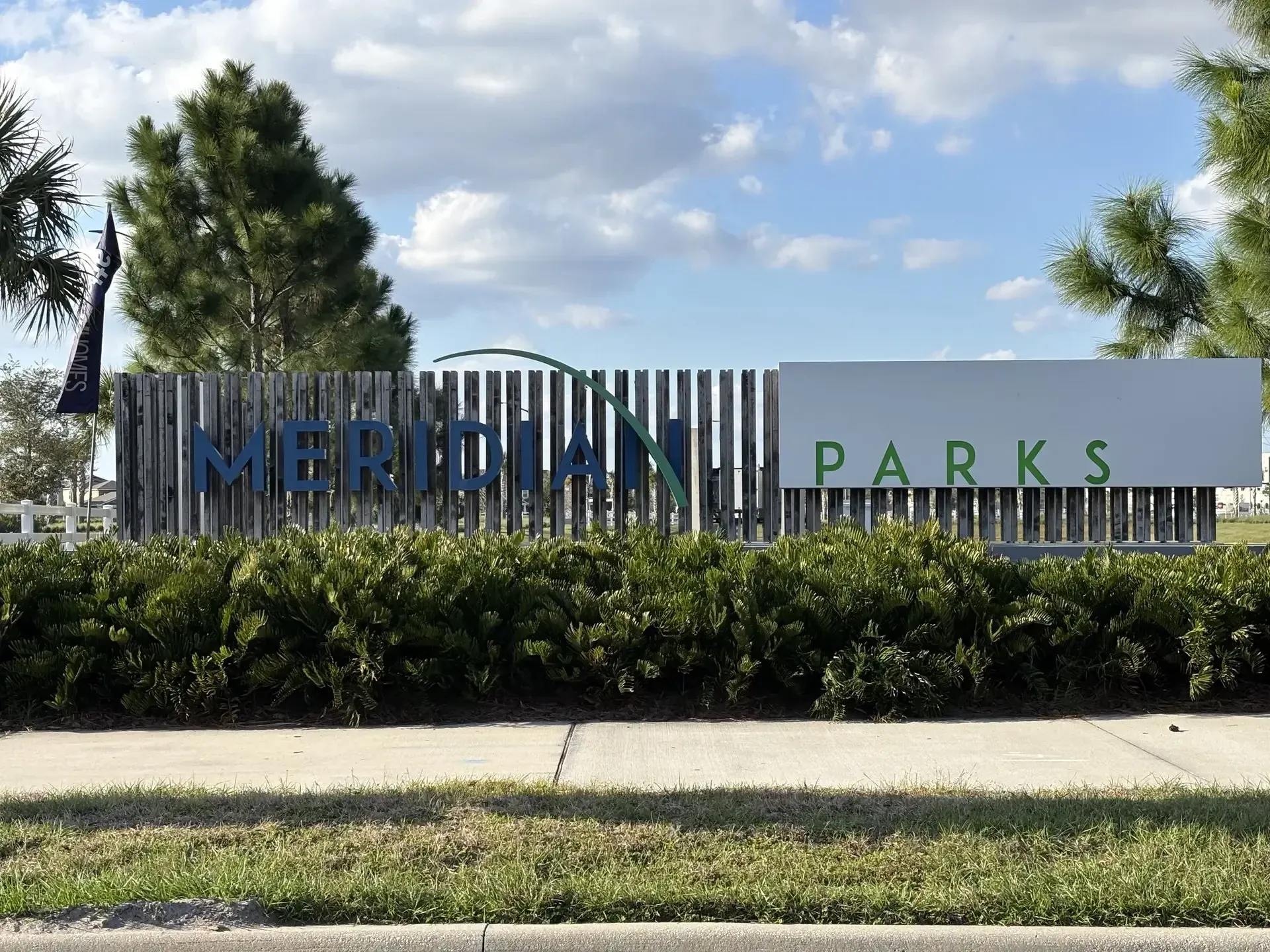
From each community’s page, where you’ll find the source for every figure.
| Community | CDD or district fee |
|---|---|
| Isles of Lake Nona | About $870–$2,180/yr |
| Laureate Park | About $1,762–$2,298/yr |
| Meridian Parks | About $1,212–$3,090/yr |
| Storey Lake | About $1,400–$2,300/yr |
| Storey Park | About $873–$2,621/yr |
| Sunbridge | About $1,599/yr (SSD) |
| Hamlin | None |
| Lakeshore Preserve | None |
| Waterleigh | None |
Sources
- Florida Statutes § 190.012, Special powers; public improvements and community facilities
- Florida Statutes § 190.011, General powers (collection of special assessments)
- Florida Statutes § 190.021, Taxes; non-ad valorem assessments
- Florida Statutes § 190.006, Board of supervisors; members and meetings
- Florida Statutes § 190.048, Sale of real estate within a district; required disclosure to purchaser
- Florida Statutes § 190.009, Disclosure of public financing
- Laws of Florida, Chapter 2017-220, Sunbridge Stewardship District
Other terms on this page, like HOA and millage, are in the glossary.
This page explains how CDDs work; it isn’t legal or tax advice.